
Build Less. Mean More.
Last year, AI unlocked endless possibilities. In our excitement, we built, explored, and shipped-fast.
Now we're drowning in it. Content. Products. “People”, even.
And it got me wondering: What does this unlock mean for how people behave and what we choose to build next?
In my search, I kept circling one truth: in a sea of AI-generated everything, we've lost something deeply human. Care.
This flood of information has simultaneously created cognitive fatigue and eroded trust¹ online.
In response, a quiet rebellion is emerging.
People want less.
Less screen time, more analog tools².
Fewer things, more moments³.
Less chasing perfection, more embracing what’s real⁴.
They’re seeking authenticity beyond the screen.
The ink stain on the side of their hand.
The chew of a gummy bear.
The imperfection that feels human.
When limitless technology meets a culture exhausted by overconsumption, the implications run deep.
People’s time spent online is directly connected to our livelihood. To earn them back, we must pause and ask: Not what can we build? But what should we build?
As attention shrinks and trust fades, meaning becomes the differentiator.
What Comes After the Excess
Intent matters. Knowing where things are headed matters. But we can only move forward if we’ve truly looked back.
Throughout history, cultural moments of restraint often follow eras of excess.
Here are a few examples:
1. Victorian to Bauhaus
From ornate excess to function-first.
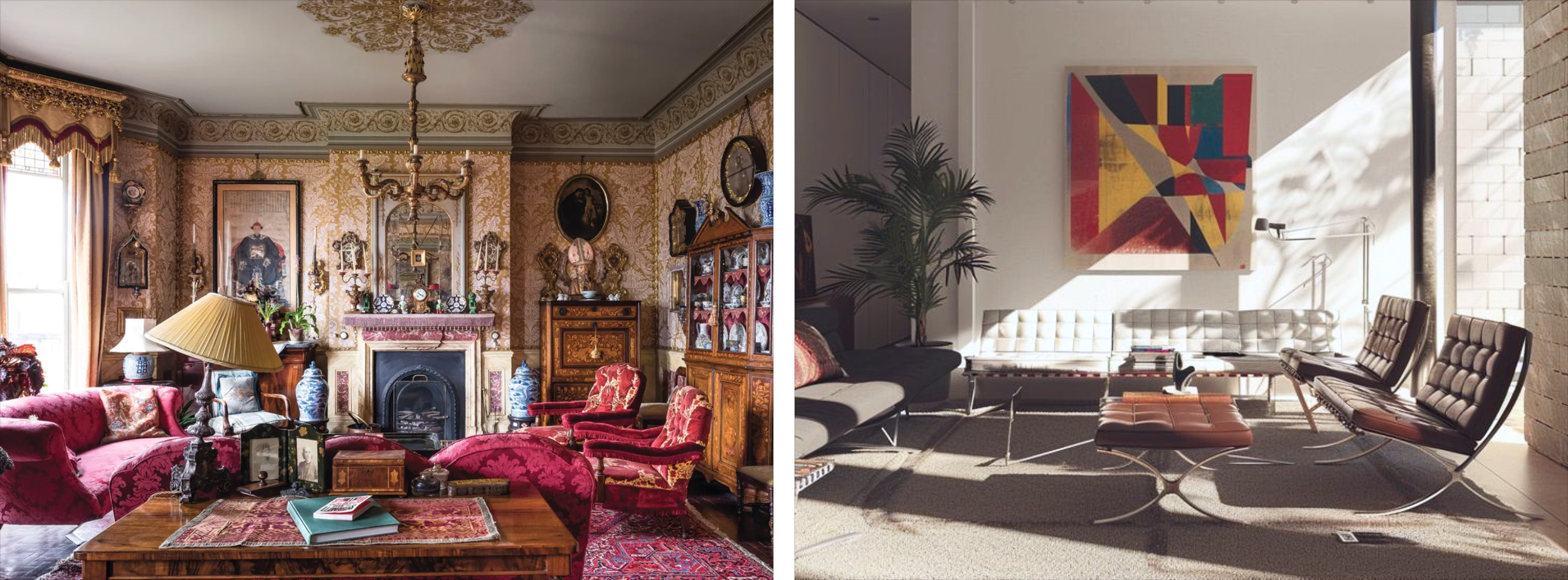
Image sources: Mallery Hall / Upscale Magazine
Victorian design thrived on accumulation. Rich fabrics, intricate patterns, relentless detail. More was more. Decoration signalled virtue and value.
As war became a reality, abundance was met with disdain. Respect and character came from using less.
This gave way to the Bauhaus movement, which stripped design back to only the essential. Form now followed function.
Here, minimalism wasn’t a style. It was a cultural reset.
2. Early Web to Google
From chaotic creativity to intentional simplicity.
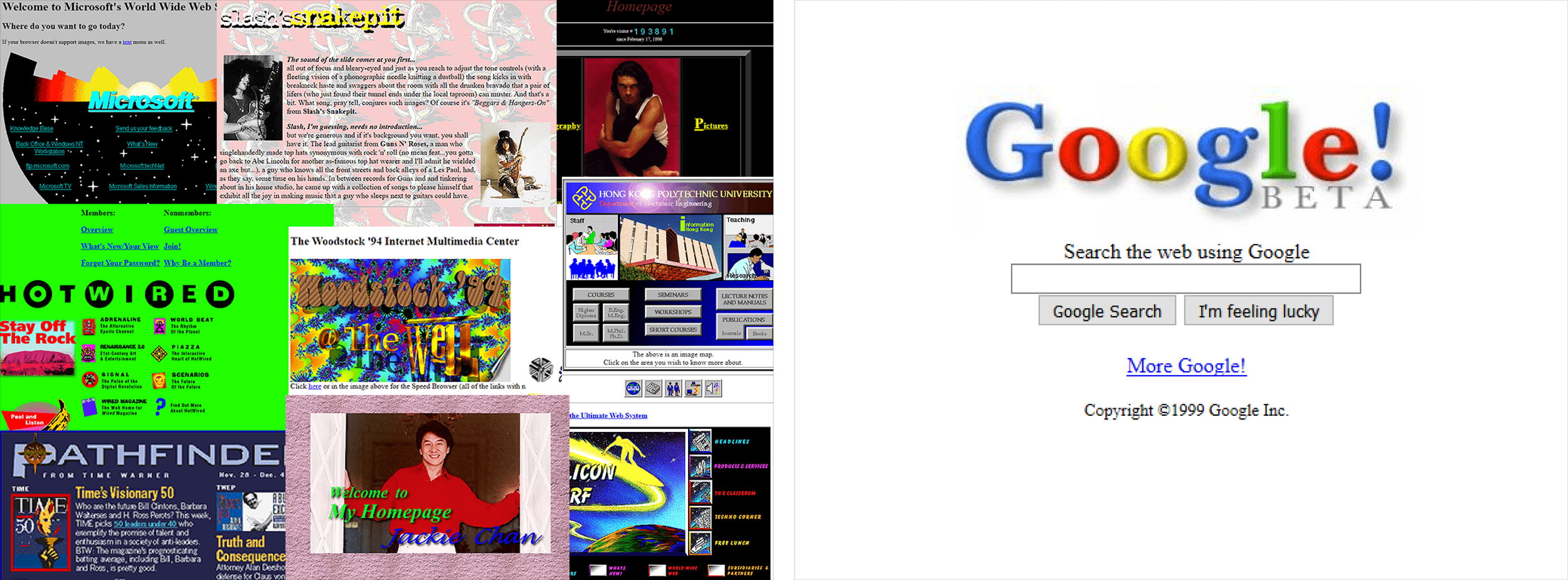
Image sources: Web Design Museum
The early internet was wild. We had tiled backgrounds, clashing fonts, and flashing GIFs. It was expressive and personal, maximalist by enthusiasm.
Over time, this enthusiasm became exhaustion. The internet became bloated. Pages got louder, not clearer.
Then Google offered a radical solution: One query. One box. One list.
Information became easily accessible, focused, and organized.
It was the beginning of something deeper: Interface shaped by intent.
Google’s design made simplicity useful. Over time, it became trust.
3. Marvel to Ghibli
From maximalist plots to meaningful pause.

Image sources: Marvel Studios / Studio Ghibli
The mid-2000s chased cinematic excess. More characters, more twists, more timelines. The more complex the story, the more invested fans became. In order to enjoy something, you needed to follow the thread closely. It became a second job.
But lately, perhaps because of AI-generated content, we’ve seen a pivot.
As people seek less, the stories that resonate most embrace stillness. Meaning lives in the space between moments. The words left unsaid. The stories with closure.
This shift shows us what people want: stories that breathe.
And perhaps not just for storytelling, but for how we build and what we choose to shape.
Restraint Is the Real Disruption
Even in rebellion, there is pattern.
Expansion, then contraction.
Maximalism, then minimalism.
Build, then pause.
In a world flooded by AI slop, lasting relevance doesn’t come from building everything.
It comes from building what matters.
So choose less. Mean more.
Before you build, ask: Does this deserve to exist?
Because the hard truth? Most things we’re building today don’t.
References
¹ Human Clarity Institute (2025). Digital Trust Report 2025: How AI-generated content is reshaping authenticity, attention, and consumer confidence online. Human Clarity Institute
² Pinterest Predicts 2026. Trends: Intentional Living & Analog Rituals. Pinterest Business
³ Business Insider / Mastercard (2025). Consumers Shift to Purpose, Passion & Bucket Lists. Business Insider
⁴ Adworld (2026). 2026 Predictions and Wise Words for Creatives. Adworld.ie
Camello Atkinson is a Brand and Experience Design Lead at APPLY, based in Melbourne, Australia. She has worked with Kraft Heinz, lululemon, and Virgin Plus. She writes about creativity, design, and the human side of technology at chamellon.com.